
Monday 11 June 2026
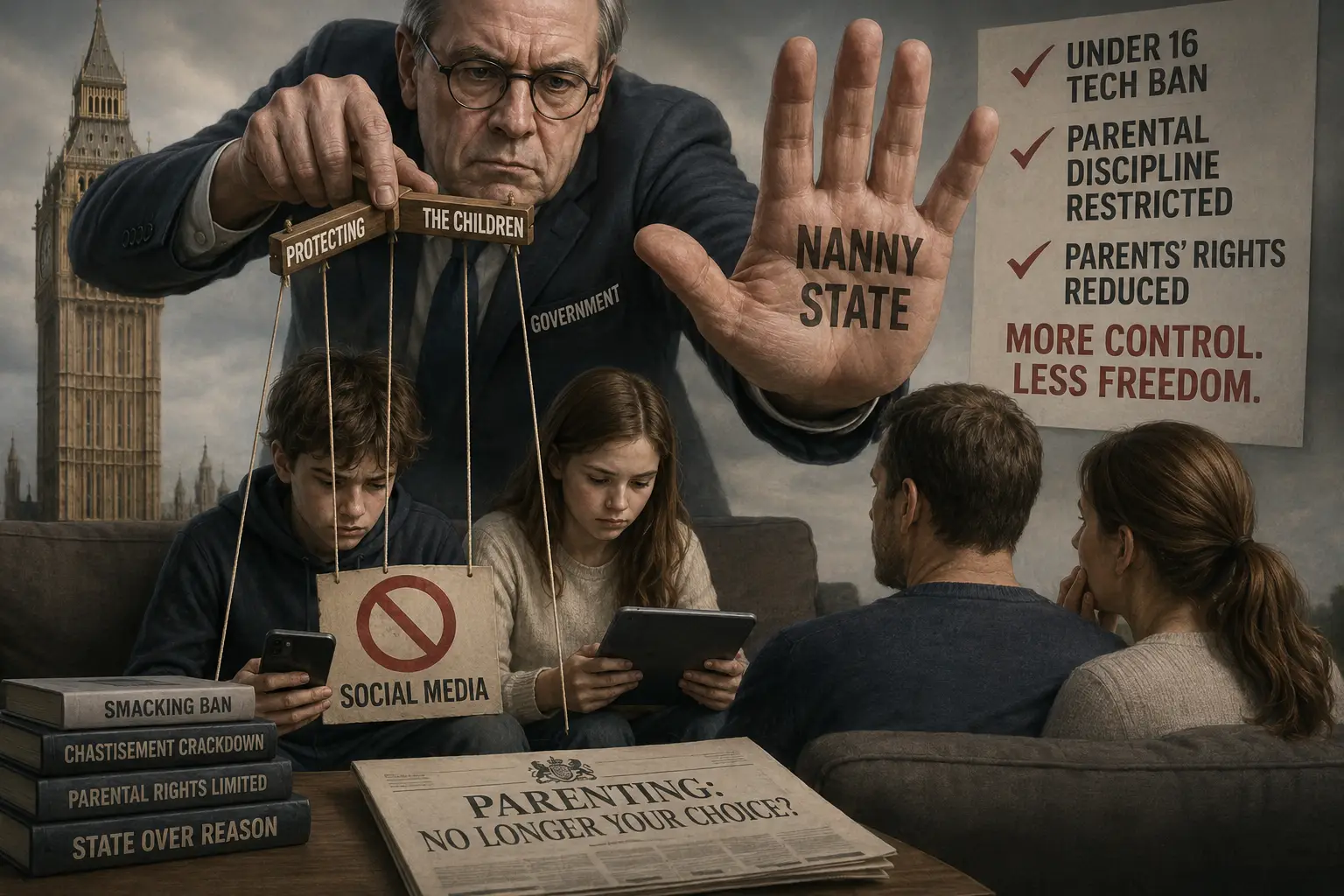
The Expanding Nanny State: Why Parenting Should Not Become a Government Function
By Question The Times Home Affairs Correspondent
For generations, British governments of all political colours have spoken of the virtues of personal responsibility. Families, we were told, form the bedrock of society. Parents were expected to guide, discipline and protect their children. Yet with each passing year, Westminster appears increasingly determined to transfer those responsibilities from the home to the state.
The latest proposal to restrict or ban under-16s from using social media and certain technology platforms represents another step along this well-trodden path. While concerns over online safety are genuine and deserve serious attention, the fundamental question remains: should government assume responsibilities that rightly belong to parents?
CharGPT: Ai Generated Image
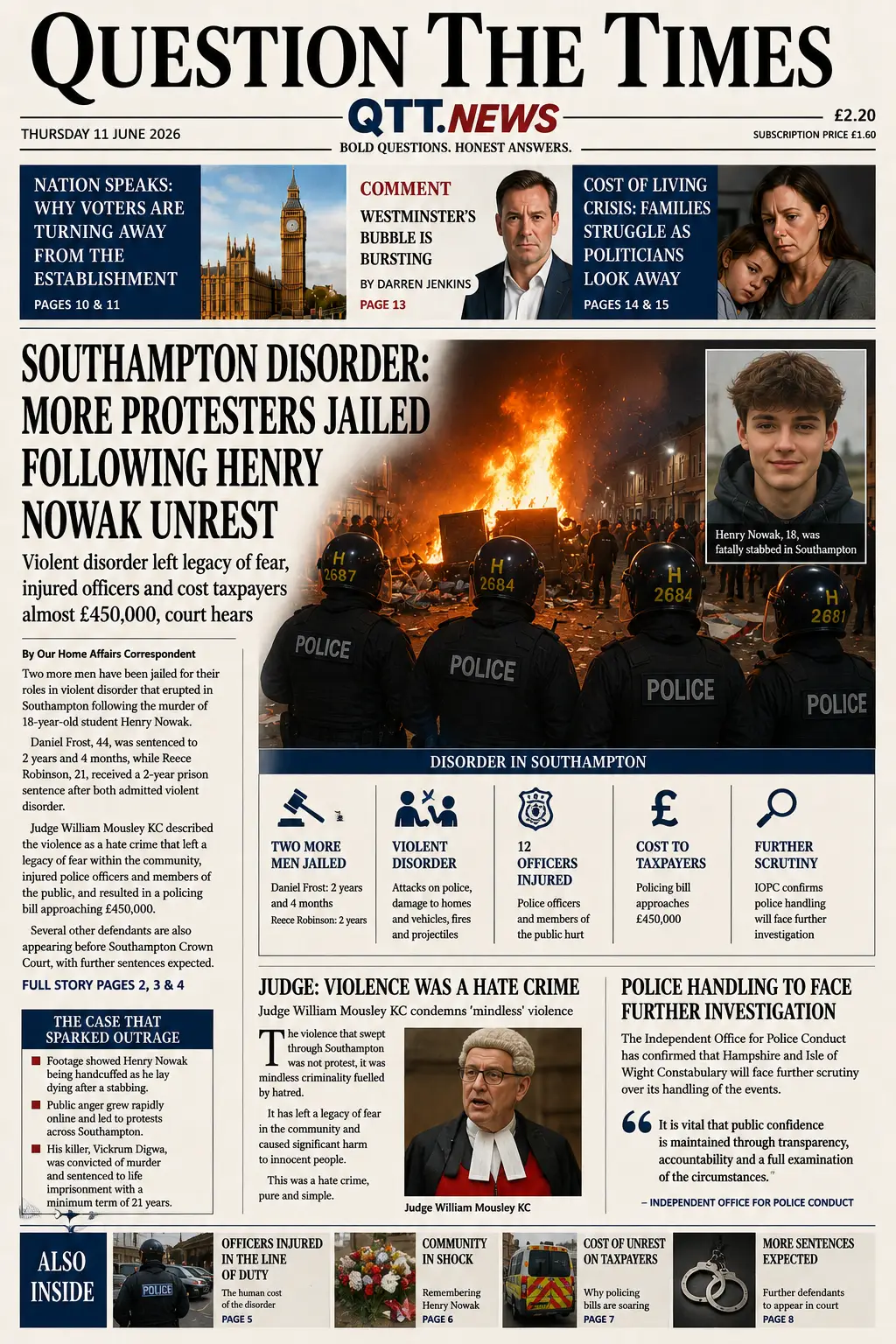
Southampton Disorder Sentences Raise Questions Over Justice, Policing and Public Trust
Monday 11 June 2026
By Question The Times Home Affairs Correspondent
Two more men have been jailed for their involvement in the disorder that erupted in Southampton following the murder of 18-year-old student Henry Nowak, as the courts continue to deal with the aftermath of one of the city’s most serious outbreaks of public unrest in recent years.
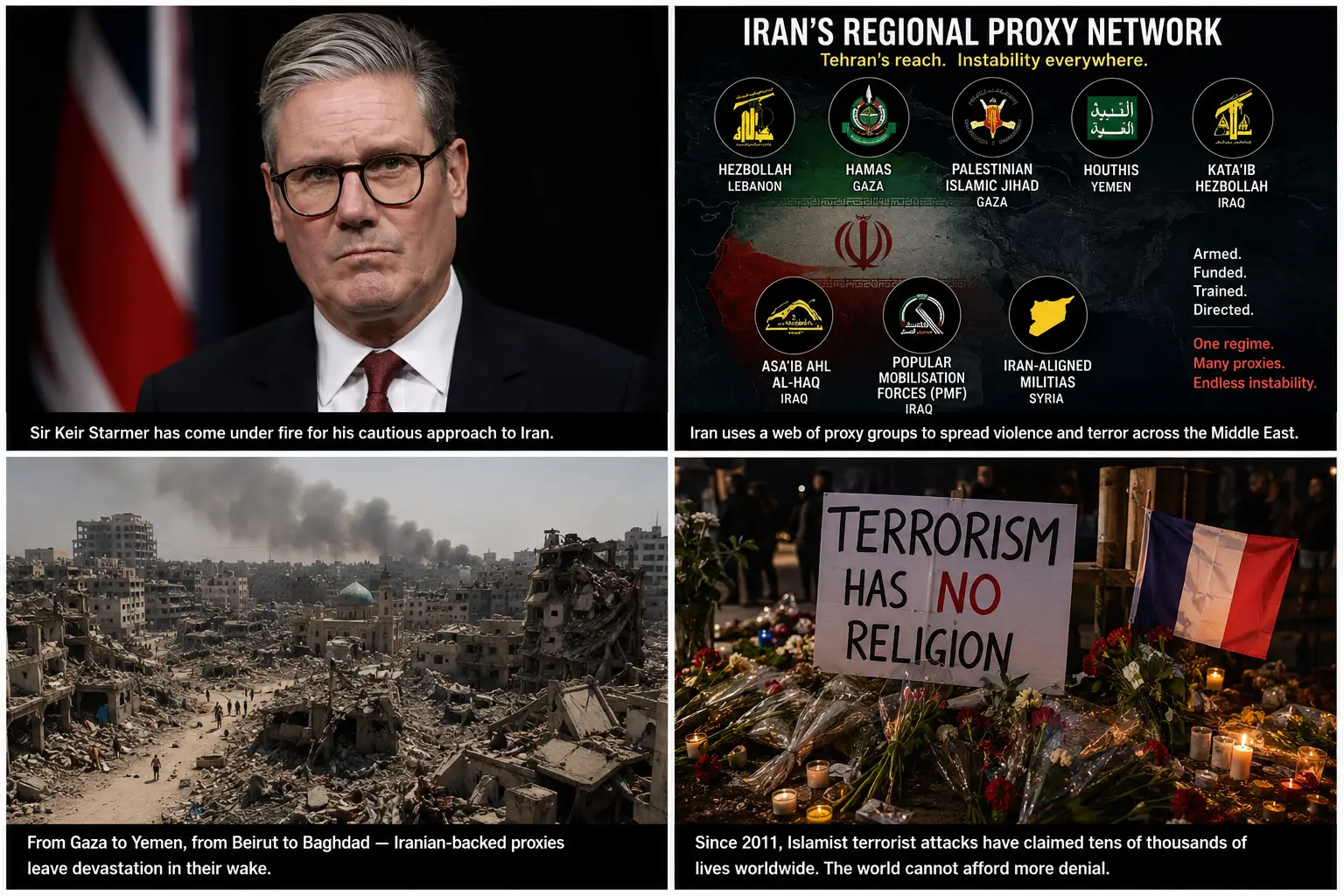
Editorial: The West’s Iran Policy Is Running on Empty — and Denial Is Not a Strategy
There is a growing tendency in Western capitals to treat Iran as a problem that can be managed indefinitely through cautious diplomacy, incremental sanctions, and carefully calibrated “de-escalation.” It is a comforting illusion. It is also increasingly detached from the strategic reality on the ground……….
CharGPT: Ai generated image
Monday 8 June 2026
Editor-in- Chief DJ
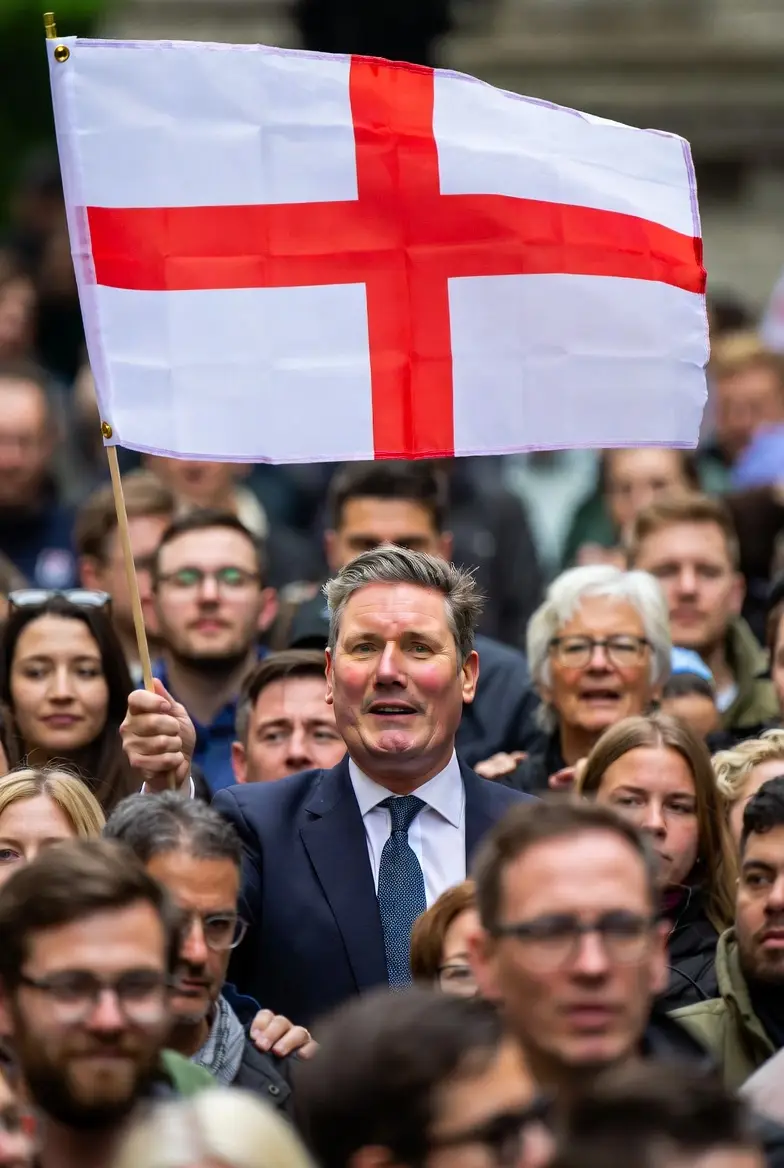
What Sir Keir Starmer actually said about our national flags
Prime Minister Sir Keir Starmer has voiced strong support for the display of national flags, describing himself as “a supporter of flags” and praising them as enduring symbols of national identity and civic pride. Yet the Prime Minister has also cautioned that such emblems should neither be devalued through overuse nor employed in a manner that risks deepening political or cultural division……..
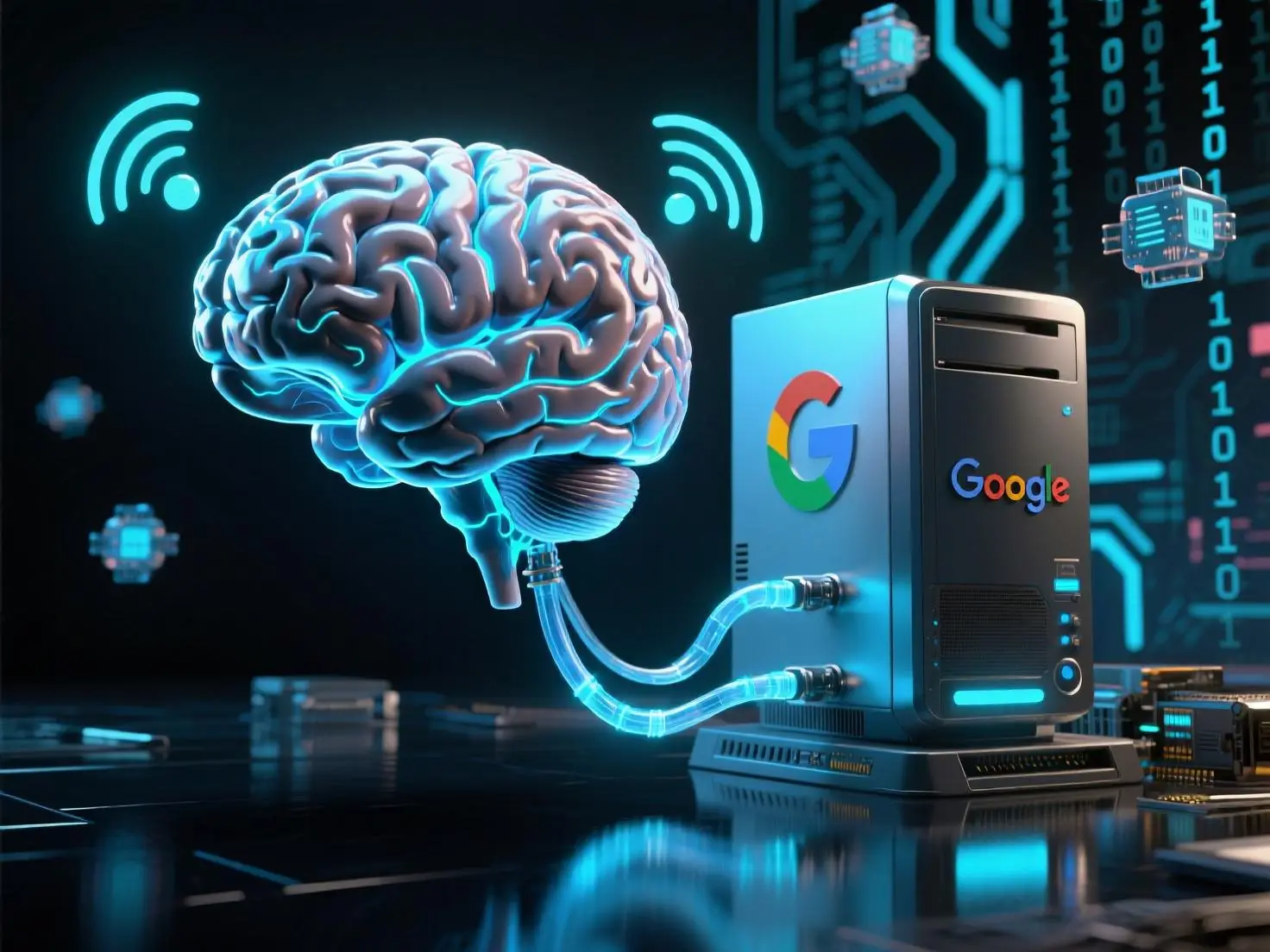
Google’s Invisible Hand: How Search Engines Could Shape the British Mind
Date: 22 August 2025 05:46am
By: Staff Reporter Darwin J
Google is so deeply embedded in daily life—from checking the weather and finding mortgage rates to researching politics—that most Britons hardly notice its subtle authority. Yet Dr Robert Epstein, a psychologist and former editor-in-chief of Psychology Today, warns that Google’s algorithms may be quietly shaping how people think, vote, and even perceive themselves—not by what they say, but how they order.
His research, presented over more than a decade and formally cited before the US Senate, focuses on “ephemeral experiences”: the autocompleted suggestions, ranked links, and news snippets that vanish from view yet may sway opinions without awareness. If Epstein is even partly correct, the implications for British democracy are profound.
The Search Engine Manipulation Effect
In 2015, Epstein, with Ronald Robertson, published a Proceedings of the National Academy of Sciences study demonstrating the Search Engine Manipulation Effect (SEME). They showed that subtly re-ordering search results in favour of one candidate could shift respondents’ preferences by up to 20 per cent, and in some groups even by 60 per cent—without participants recognising the manipulation.
“If a search engine wanted to flip an election, it could do so without leaving a paper trail,” Epstein cautioned.
British Relevance: Brexit, Elections, and Culture
These findings strike close to home. During the Brexit referendum, searches like "What is the EU?" and "impact of leaving" spiked on polling day, with the top-ranked results shaping how questions were framed. While no evidence suggests bias, in a vote decided by fewer than 4 per cent of the electorate, tiny nudges could have mattered.
Similarly, tightly fought general elections—such as the surprise narrowing in 2017 and Boris Johnson’s 2019 campaign—turned on marginal gains. With millions searching for policy positions, even a fraction of undecided voters could be swayed by what appears first.
Beyond politics, Epstein argues that repeated exposure to particular frames can subtly shape cultural values—about immigration, climate, or national identity—without scrutiny. Traditional media can be archived and questioned; search results disappear.
Algorithmic Influence: Ofcom and Regulatory Voices
Recent data from Ofcom underlines the power of intermediaries like search engines in shaping what the public sees. Their research shows that 64 per cent of UK adults use online intermediaries for news, and that articles ranked higher are nearly five times more likely to be viewed, and seven times more likely to be remembered.(Ofcom)
Ofcom’s Assessing the Risk of Foreign Influence in UK Search Results warns that many users treat search engines as neutral retrievers of information, heightening their trust—and their potential for influence.(Ofcom)
In Parliament, one MP warned that today’s digital age presents “a new, unparalleled threat to our democracy.”(Hansard) Meanwhile, David Cameron’s 2010 election strategy marked the first time modern UK campaigning embraced search-engine keywords in real time.(WIRED)
Damian Collins, former Chair of the Culture, Media and Sport Select Committee, has repeatedly emphasised tech’s risks. He warned that social media and platforms challenge traditional electoral norms, and argued that “our electoral law is under threat in the digital age.”(Wikipedia)
In 2018, Vince Cable went further, calling for dismantling major tech firms: “Regulators should be ready to ‘break up’ tech giants like Facebook, Amazon and Google.”(Wikipedia)
Google’s Defence and the Transparency Problem
Google defends its algorithms, insisting result relevancy—not ideology—drives rankings. It has also placed restrictions on political autocompletes to avoid perceived bias.
But critics say this secrecy is the issue. Without the ability to review what users see, “ephemeral” experiences leave no public or academic trace, fostering suspicion. Leaks are sensational, and partisan claims fill the void.
Solutions: Monitoring, Regulation, and Media Literacy
Epstein calls for independent real-time monitoring systems—watchdog panels that record search results, suggestions, and feeds as users see them, enabling objective oversight akin to financial market surveillance.
Full Fact and other groups urge the government to give Ofcom regulatory oversight over platforms and search engines, especially regarding AI-generated misinformation. They also call for transparency from tech firms, media literacy funding, and data access for researchers.(Full Fact)
The Online Safety Act, though a start, has been criticised for vagueness and over-reliance on Ofcom. Concerns include regulatory capacity asymmetries between government and tech.(The Times, Internet Policy Review)
Nevertheless, the regulatory framework now envisions search engines assessing harm and offering transparency while respecting freedom of expression.(GOV.UK)
Implications for Britain
Search engines have become the invisible architecture of our knowledge. In close elections and referendums, small, unseen nudges might tip the scales. Culturally, algorithmic curation could recast debates long before they reach the front page.
Yet power without accountability is a threat to democratic footing. Britons deserve to know not just what appears, but why it appears—especially when unconscious choices might bind conscious decisions.
Conclusion
Google has quietly become the plumbing of British thought, arguably as influential as traditional media—but far less transparent. Dr Robert Epstein’s research urges a reckoning: in a digital democracy, transparency cannot be optional, nor should the shaping of minds go unmonitored.
Ephemeral influence may be the most dangerous kind—and now is the time to bring what is hidden into view.
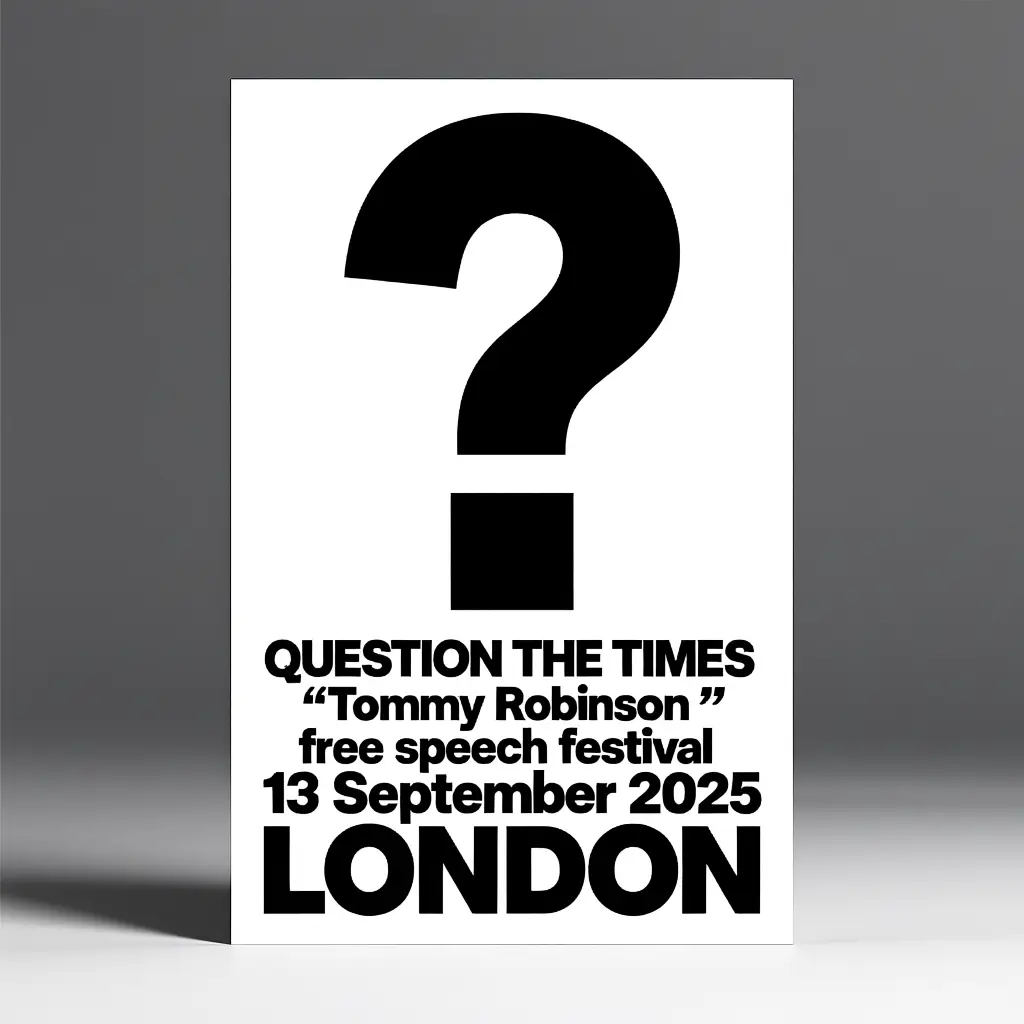
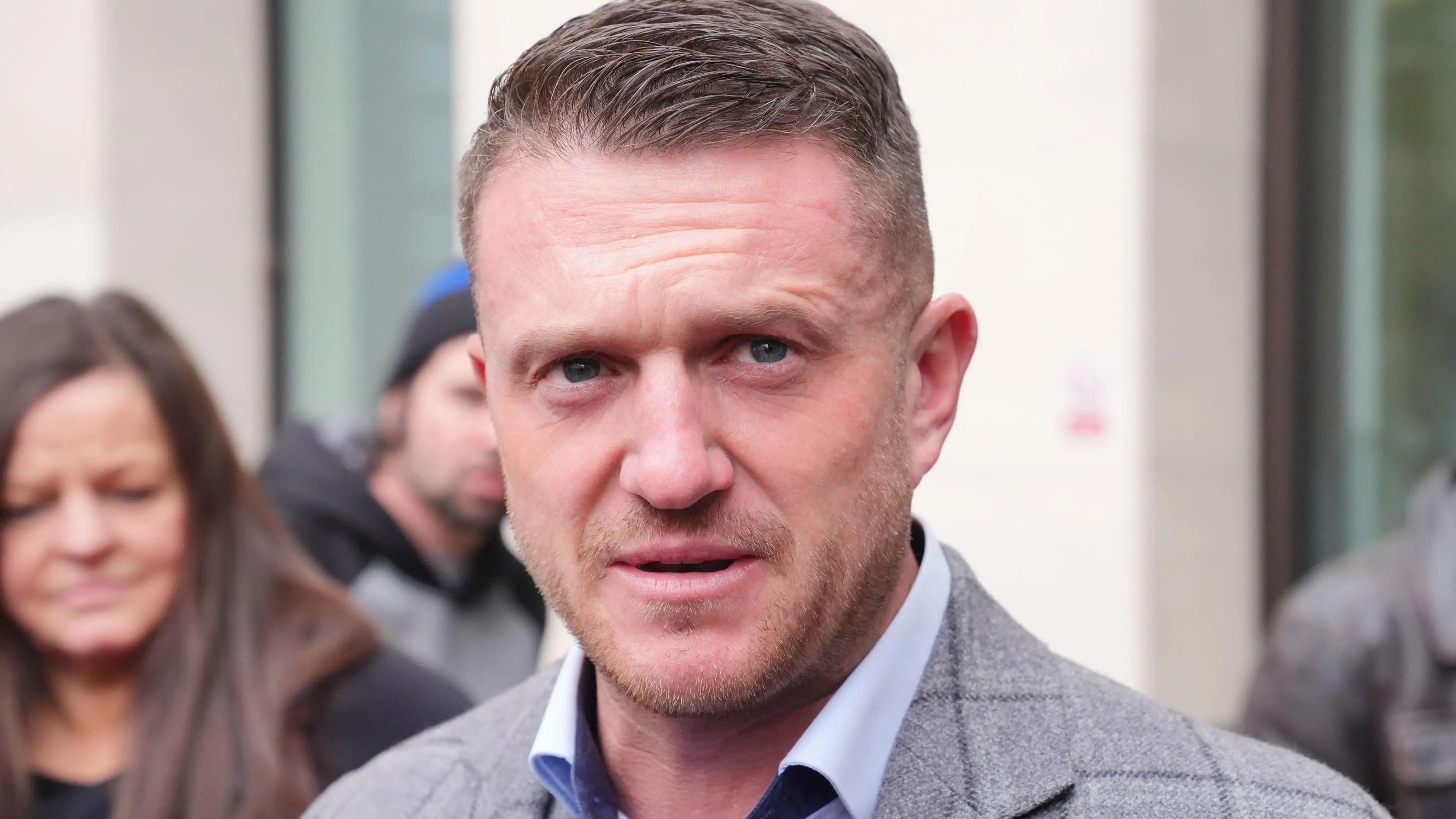
Image by the BBC
Festival of Free Speech: Tommy Robinson and the Debate on Immigration and Islam
Date: 21 August 2025 07:24am
By: Staff Reporter Darwin J
London, 21 August 2025 – Stephen Yaxley-Lennon, better known as Tommy Robinson, has announced a Free Speech Festival in London set for 13 September 2025. Branded by organisers as the "UK’s largest Free Speech Festival," it aims to draw patriots united under the motto "Uniting the Kingdom", and will be hosted in central London under the banner of Urban Scoop and the Unite the Kingdom movement (The Sun, The Times, X (formerly Twitter), NationalWorld).
A former member of the British National Party and co-founder of the English Defence League, Robinson was released early from prison in May 2025 after serving part of an 18-month sentence for contempt of court—stemming from repeatedly breaching a High Court injunction related to defamatory allegations he had made (The Sun, The Times, Wikipedia). Following his release, he reaffirmed his commitment to free speech, announcing plans for the forthcoming festival (The Times).
What is a fascist—and why Robinson is not one (by his supporters’ account)
A fascist, in political science, typically refers to a movement or ideology characterised by authoritarianism, suppression of dissent, ultra-nationalism, and often racial supremacy or militancy. Advocates of the term argue that modern democratic freedoms are incompatible with fascist rule.
Supporters of Tommy Robinson deny that he meets these criteria, arguing that:
-
He is motivated by patriotism and concern for British identity—not the suppression of freedoms.
-
He maintains personal relationships across racial and religious lines, including friendships with individuals who are Black, Indian, Pakistani, and from various faiths.
-
Though public statements reflect opposition to Islam (as an ideology) and to illegal immigration, Robinson’s defenders insist he is not Islamophobic (i.e., hating people because they are Muslim) nor anti-Semitic, nor anti-Muslim—emphasising that he distinguishes between belief systems and individuals.
-
They claim his activism is driven by cultural and security concerns, not by hatred of any race or religion.
These assertions are contested and heavily debated in public discourse. Nevertheless, they reflect how Robinson portrays himself and how his loyal base frames his views.
About the Festival of Free Speech / Festival of Freedom
Public sources confirm that:
-
The festival is scheduled for 13 September 2025 and is promoted as a Free Speech Festival—with pledges to unite patriots, defend cultural identity, and assert free expression rights (X (formerly Twitter), Facebook, The Times, The Sun, NationalWorld).
-
Exact location details, start times, and a full line-up of speakers have not been revealed publicly. One social media post indicates it may be hosted in central London, possibly organised by Urban Scoop (X (formerly Twitter), The Times, NationalWorld).
-
Celebrity support has emerged. Former TV host Steve Miller has publicly announced his attendance, citing concern over the UK's “worrying state”, and encouraging others to attend (NationalWorld).
Family-oriented, non-violent messaging
Robinson and his team emphasise:
-
The event will be family-friendly, encouraging women, men, and children to attend, celebrate British culture, and express views respectfully.
-
Attendees are urged not to wear face masks or balaclavas, to ensure transparency and prevent infiltration—or at least that's the given reasoning (The Times, The Sun).
-
Any signs of aggression are to be discouraged. Participants are reportedly encouraged to gently intervene if someone becomes violent or aggressive, reminding them that the event is intended to be non-violent. Safety and decorum are called for.
Political positioning: not far-right, say supporters
While Robinson is widely labelled a far-right activist in mainstream reportage and academic classification—due to his history with the BNP and EDL—his supporters dispute this label, preferring terms like “patriot” or “free speech advocate.”
They argue:
-
His concerns focus on illegal immigration and opposition to the religion of Islam (as distinct from Muslims as people).
-
He has emphasised associations with people of various backgrounds and faiths, underlining he is not motivated by race or religious animus.
-
His event explicitly excludes far-right attendees, according to promotional messages framing the festival as inclusive rather than extremist.
Conclusion
This Free Speech Festival, scheduled for 13 September 2025 in central London, is a high-profile event organised by Tommy Robinson following his early release from prison. His message emphasises patriotism, freedom of expression, and cultural preservation. He insists it will be peaceful and family-oriented. However, many details—especially the venue, schedule, and speakers—remain undisclosed publicly at this time.
Reminder: Please respect the police and all other essential services that will be there to help you if you have any difficulties. Remember, the police are members of the public like you and I. However, when they are in uniform they can't express there beliefs or opinions. Parents set this example for your children and agitators stay away if you cannot respect the police and those people and families that will be attending. Freedom of speech, comes with respect for all citizens. You can't have one without the other.
By: Editor-in-chief
Respecting the Police: Why We Must Recognize Their Dedication and Support
Date: 17 August 2025 12:42am
By: Staff Reporter Darwin J
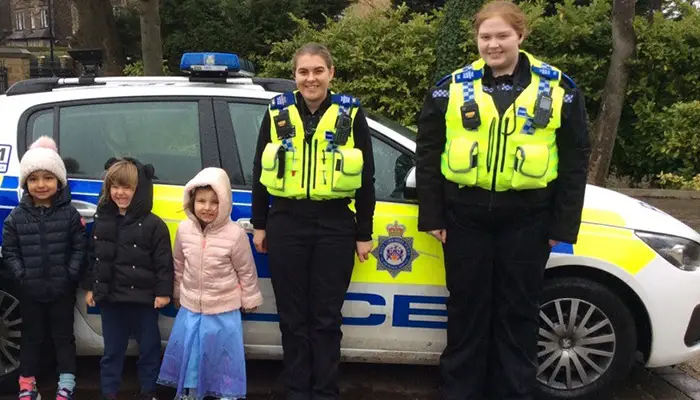
In today’s world of heated debates and frequent demonstrations, it is vital that we remember one thing: the police are there to serve and protect everyone. The men and women who put on the uniform each day go far beyond what most of us could ever achieve. Their dedication to public safety, their willingness to face danger, and their constant readiness to help—24 hours a day, 7 days a week, 365 days a year—make them an irreplaceable part of our communities.
Whether you agree or disagree with the cause of a protest, the police are not there to oppose you—they are there to ensure that your voice can be heard safely while protecting the rights of others too. This balance is not easy, and it requires both protesters and the general public to show respect and cooperation.
Respect, Empathy, and Gratitude
Police officers are often taken for granted, until the moment we need them. They are the ones who run toward danger when others run away. They are the ones who keep protests lawful, safe, and peaceful. They are also the ones who sacrifice time with their families, risk their safety, and remain calm in the face of hostility.
As members of the public, we must show respect, empathy, and gratitude for the work our police do. They are not our enemies—they are our protectors, ensuring that Britain remains a free, safe, and democratic society.
Why Ordinary Britons Are Told Not To Fly Their Own Flags
Date: 17 august 2025 A Sunday Feature on Patriotism, Politics, and Two-Tier Justice
By: our home affairs correspondent Sam Jones
Across Britain today, something as simple as flying the Union Jack or St George’s Cross risks courting suspicion. Why? Because national symbols have become entangled in political identity, cultural divide, and what critics call two-tier justice.
1. Bans and Warnings: Real-Life Incidents
i) St George’s Cross Banned at School in Luton (2010)
At Icknield School in Luton, children celebrating St George’s Day by wearing Cross of St George badges or painting the flag on their hands were sent home. One child even faced potential suspension before being allowed to return, while the school reportedly apologized to another pupil who stood her ground after being threatened with exclusion 1066engdems.blogspot.com.
ii) England Flags Removed from Polling Station (2016)
During the EU Referendum on 23 June 2016, St George’s Cross flags were removed from a polling station at Mayfield Cricket Club in Palmers Green. Enfield Council acted after voters likened the display to an “EDL rally” and concerns that the flags might influence the Brexit vote. The Electoral Commission advised removal to avoid perceived bias The Standardlocalgov.co.uk.
iii) Labour’s Shadow Sports Minister on Flag Taint (2018)
In July 2018, Labour’s shadow sports minister, Rosena Allin-Khan, suggested that the St George’s Cross had become tainted by far-right connotations. She noted that fewer flags were visible, even during the World Cup, possibly because people feared they’d be associated with extremist ideology Telegraph.
2. The Broader Landscape of Inconsistency
i) Flags of Other Movements Fly Freely
In contrast, other symbolic flags face little challenge:
- Palestinian flags are displayed widely across Tower Hamlets—including school entrances—prompting concerns among Jewish families, one of whom said they felt unsafe enough to relocate their children to schools in other boroughs Telegraph.
- Rainbow flags for Pride and the EU flag are common at public institutions and political events—raising concerns about why the English flag receives such differential treatment.
ii) Sadiq Khan Encourages Flagging Pride (2017)
London Mayor Sadiq Khan urged people not to feel embarrassed about flying the St George’s Cross, arguing it was possible to be a proud patriot without being a divisive nationalist Express.
3. Voices from the Ground
Real voices breathe life into the story:
“I think that many people feel that flying a St George’s cross is synonymous with far-Right ideology… that sometimes prevents them from doing so.” — Rosena Allin-Khan, Labour’s shadow sports minister Telegraph
“Children in a Luton school … were sent home for wearing badges or having a flag painted on their hand.” — Blog report summarizing reactions at Icknield School 1066engdems.blogspot.com
4. Cultural Context: Flags as Identity Warehouses
- Studies have shown that even British-Pakistani citizens in Bradford flew the St George’s flag with pride during the 2002 World Cup—seeing it as inclusive and emblematic of belonging to a modern multicultural England, while viewing the Union Jack as colonialist inkl.
- Yet the rise of the English Defence League and similar groups hijacking the flag has altered public perception—transforming what was once a symbol of national unity into something seen by some as fraught or exclusionary inkl.
5. Two-Tier Justice: Explanation and Analysis
Critics argue there's an emerging double standard:
|
Allowed Flags |
Discouraged/Restricted |
|
Rainbow flags (Pride), EI flags, Palestinian flags |
St George’s Cross, Union Jack |
The argument: under Labour—and broader cultural institutions—flags that align with internationalist or progressive causes are celebrated, while traditional patriotism is suppressed or stigmatized. This is not just frustration over symbols, but a deeper grievance about fairness and cultural exclusion.
6. Final Reflection: Symbols and Belonging
For many veterans, football fans, and working-class families, the English flag remains a heartfelt expression of identity—not ideology. The question looms: why should flying a flag, a staple of national pride elsewhere, be equated with extremism here? The answer may lie not in shifting politics alone, but in reclaiming the story around patriotism—making it inclusive, not divisive.
Until then, the St George’s Cross and Union Jack remain embroiled in a tug-of-war between nostalgia, political narrative, and claims of justice—or the denial of it.
Question the times have your say
Voice your opinion? Tell us about your experience with our boys and girls in blue? Email: questionthetimes@stop.army Change only comes to those whom voice their opinions.