Politics
The Man Who Stands By His Convictions
The £5 Million Question Facing Nigel Farage
By Political Correspondent | Westminster Analysis
Published: 24 June 2026 | Last updated: 24 June 2026
Nigel Farage, long a self-styled outsider of British politics, now finds himself at the centre of scrutiny following a £5 million payment from billionaire Christopher Harborne.
The Parliamentary Commissioner for Standards is investigating whether the payment should have been declared after Mr Farage became MP for Clacton. The inquiry is assessing whether Commons disclosure rules apply.
“The issue is not only what was given, but whether it should have been declared.”
Financial backing and scrutiny
Christopher Harborne has donated significant sums to Reform UK and also made a £5 million personal payment to Mr Farage, now central to parliamentary scrutiny.
Farage’s explanation
Mr Farage has described the payment both as a security-related arrangement and, more recently, as an unrestricted personal gift.
“Once it is mine, it is mine to spend as I choose.”
Transparency debate
Supporters argue it is a private matter between individuals. Critics say parliamentary rules require disclosure where financial benefits may relate to public office.
Wider implications
The case has intensified scrutiny of the relationship between Mr Farage and Christopher Harborne and raised wider questions about transparency in British politics.

The Standards Commissioner will determine whether parliamentary rules were breached. The broader political debate is likely to continue regardless of the outcome.
In Westminster, it is often said that political careers are not undone by clear wrongdoing, but by questions that refuse to go away.
Nigel Farage, who has spent decades positioning himself as an outsider challenging Britain’s political establishment, now finds himself at the centre of one such question.
The Parliamentary Commissioner for Standards has opened an investigation into whether Mr Farage should have declared a £5 million payment from billionaire businessman Christopher Harborne after becoming the Member of Parliament for Clacton. The inquiry is not a finding of wrongdoing. It is examining whether the payment should have been registered under Commons rules governing MPs’ financial interests. (ITV News)
At the heart of the matter is a single transaction that has drawn intense political and media scrutiny.
Mr Harborne, a British-born cryptocurrency investor and long-standing supporter of Reform UK, has donated substantial sums to the party over recent years, making him one of its most significant financial backers. Alongside those political donations, he also made a £5 million payment to Mr Farage, which is now under examination by Parliament’s standards watchdog. (The Guardian)
It is this personal payment, rather than party funding, that has prompted the current inquiry.
Mr Farage has given varying explanations for the money.
Initially, he suggested the funds were intended to support long-term personal security arrangements, citing the risks associated with his high-profile political career. More recently, he has described the payment as an unrestricted personal gift, insisting that it was not connected to his parliamentary duties or political activities.
He has argued that the money was his to use as he saw fit.
In comments reported this week, he said that once received, the funds were a private matter, adding that they could be spent in any way he chose. (The Times)
That position has prompted further scrutiny in Westminster.
If the payment was a purely private gift, supporters argue, why has it become the subject of such sustained political attention?
Mr Farage’s allies say the answer lies in his political profile rather than the nature of the transaction itself. They point out that he has earned income across business, broadcasting, journalism and public speaking over many years and argue that financial gifts between wealthy individuals are not, in themselves, unusual.
From this perspective, they question why a private arrangement between two individuals should be treated as a matter of public controversy.
Critics take a different view.
They argue that the central issue is not whether Mr Farage was entitled to receive the money, but whether it should have been declared under parliamentary rules once he became an MP. Those rules require Members to register certain financial benefits where they could reasonably be considered relevant to their public role, in order to maintain transparency and public confidence.
The Parliamentary Commissioner for Standards is now considering whether that threshold has been met. (ITV News)
The investigation does not determine wrongdoing and makes no conclusion at this stage.
The affair has also drawn attention to Christopher Harborne’s wider financial relationship with Reform UK.
Mr Harborne has donated an estimated £9 million to the party over recent years, making him one of its most significant individual benefactors. Reporting has also linked him to financial support for overseas travel undertaken by Mr Farage, including visits to the United States connected to political events involving Donald Trump. These reports have not suggested any improper arrangements or conditions attached to the support. (The Guardian)
However, they have contributed to wider scrutiny of the relationship between the two men and the boundary between personal support and political funding.
The political context is significant.
Reform UK has sought to present itself as a party committed to transparency and accountability in public life. Critics of Mr Farage argue that the current investigation therefore carries particular political weight, regardless of its eventual outcome.
Supporters counter that the scrutiny reflects a broader pattern of disproportionate attention directed towards Mr Farage and argue that private financial arrangements are being recast as political controversies.
The Standards Commissioner’s findings will determine whether parliamentary disclosure rules were breached. They will not address the broader political debate about the legitimacy or motivations behind the payment.
That debate is likely to continue.
At its core lies a question that Westminster has grappled with repeatedly in recent years: where is the line between private financial generosity and public accountability for elected representatives?
For now, that question remains unresolved.
Editor-in-Chifes-Opinion
However, the real question is: would you like the public, or a third party, looking into your personal finances? I'm pretty sure you wouldn't. No matter the position you hold, if you are in the public eye, any individual can and will scrutinise your finances.
So, if you were in Mr Nigel Farage's position, then surely you would have the right to defend yourself. As he has said many times, he believes he has done nothing wrong.
Remember, he has more to lose than £5 million. He has his reputation and the support of his colleagues within Reform UK. Personally, good luck to you, Nigel. You have the conviction to stand by your word. You can't get any more British than that. It's as good as a handshake.
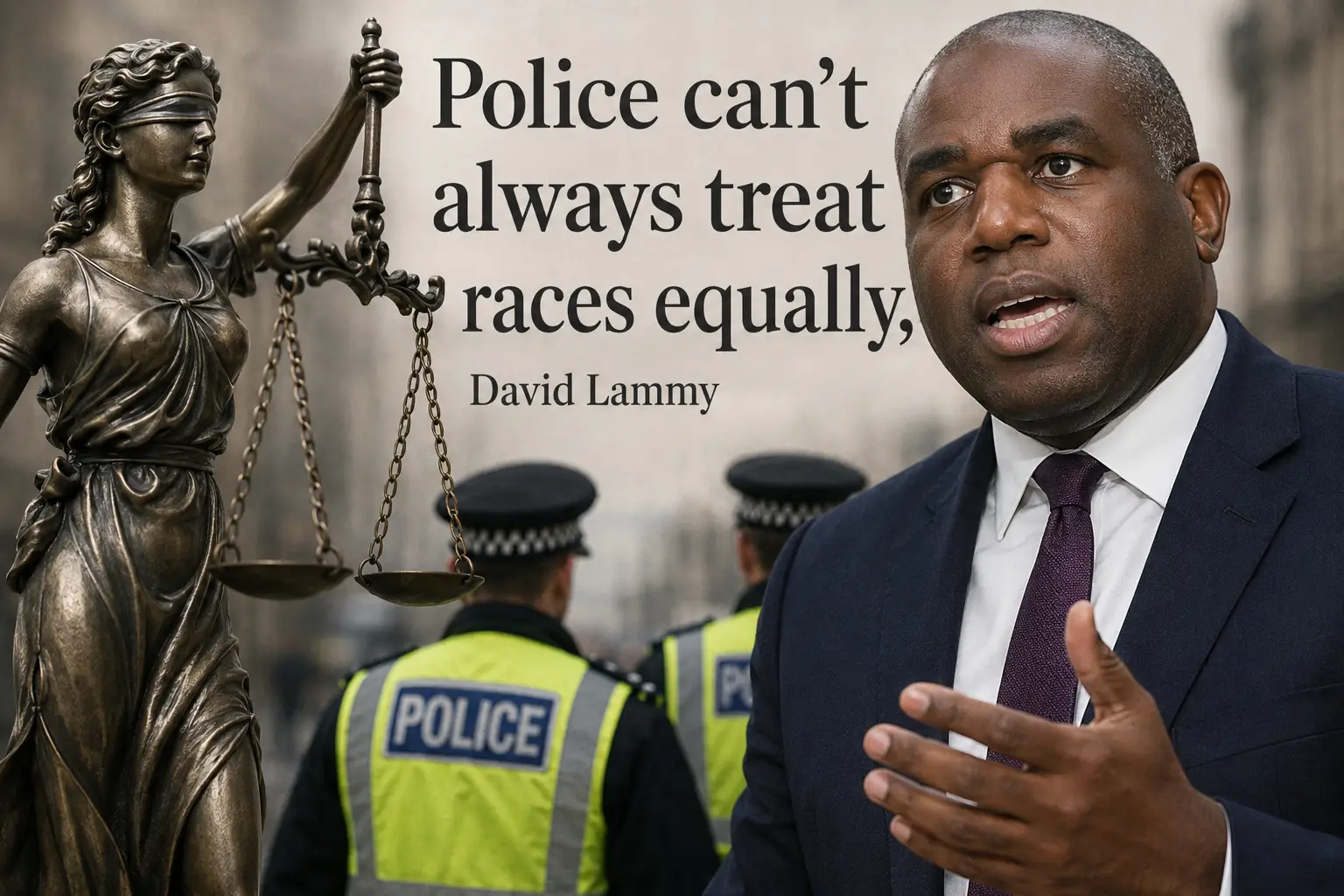
ChatGPT:Ai Generated Image
Equality Before the Law Cannot Be Qualified
Words matter, particularly when spoken by those entrusted with upholding the nation's justice system. That is why David Lammy's assertion that police cannot always treat different races equally deserves careful scrutiny.
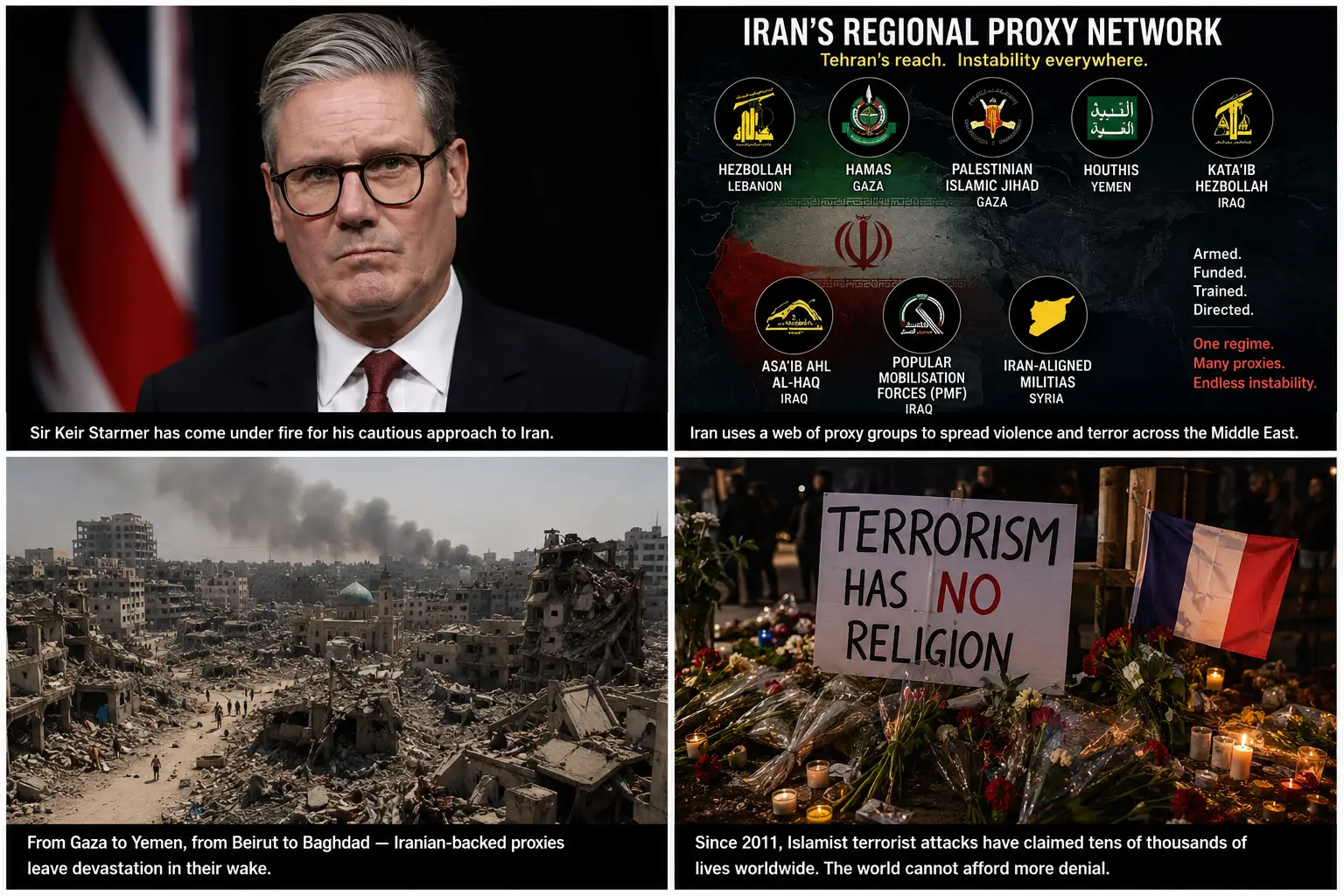
CharGPT: Ai generated image
Editorial: The West’s Iran Policy Is Running on Empty — and Denial Is Not a Strategy
There is a growing tendency in Western capitals to treat Iran as a problem that can be managed indefinitely through cautious diplomacy, incremental sanctions, and carefully calibrated “de-escalation.” It is a comforting illusion. It is also increasingly detached from the strategic reality on the ground……….
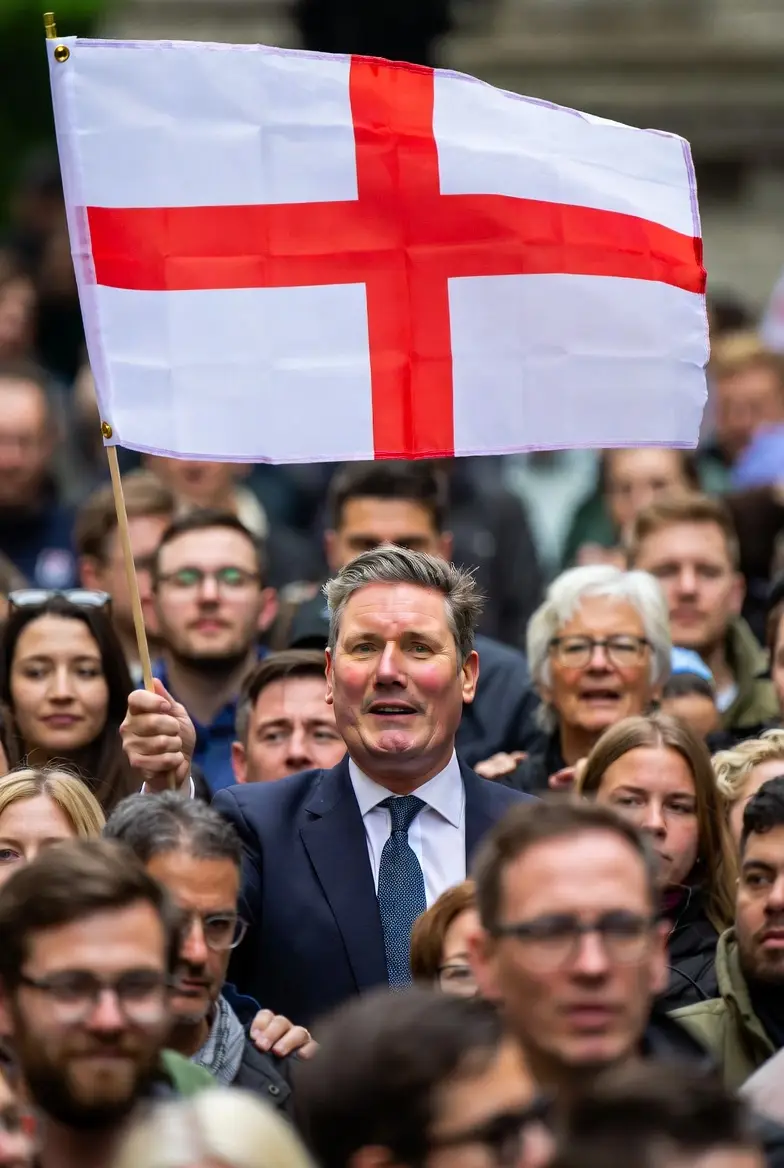
What Sir Keir Starmer actually said about our national flags
Prime Minister Sir Keir Starmer has voiced strong support for the display of national flags, describing himself as “a supporter of flags” and praising them as enduring symbols of national identity and civic pride.
Yet the Prime Minister has also cautioned that such emblems should neither be devalued through overuse nor employed in a manner that risks deepening political or cultural division.
Downing Street has sought to emphasise that patriotism — and pride in flying both the Union flag and the Cross of St George — forms an important part of Sir Keir’s outlook. The intervention follows growing debate in several parts of the country after local authorities opted to remove flags from lampposts and other items of public street furniture.