
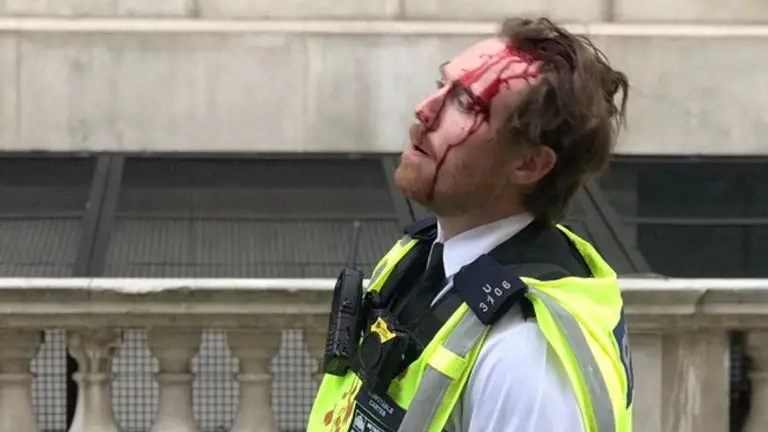
Respecting the Police: Why We Must Recognise Their Dedication and Support
Date: 17 August 2025 12:42am
By: Staff Reporter Darwin J
In today’s world of heated debates and frequent demonstrations, it is vital that we remember one thing: the police are there to serve and protect everyone. The men and women who put on the uniform each day go far beyond what most of us could ever achieve. Their dedication to public safety, their willingness to face danger, and their constant readiness to help—24 hours a day, 7 days a week, 365 days a year—make them an irreplaceable part of our communities.
Whether you agree or disagree with the cause of a protest, the police are not there to oppose you—they are there to ensure that your voice can be heard safelywhile protecting the rights of others too. This balance is not easy, and it requires both protesters and the general public to show respect and cooperation.
What It’s Like for Police at a Protest
Imagine standing in the middle of two large groups, both passionate, both shouting, both sometimes angry. Officers must keep the peace, prevent violence, and protect free speech—all while knowing that at any moment, the atmosphere could turn hostile. They are often the first targets of abuse, both verbal and physical. Objects can be thrown, tempers can flare, and yet the officers are expected to remain calm, impartial, and professional.
This is not just a job—it is a test of courage, resilience, and commitment to the public good.
How Protesters Can Help the Police
To ensure demonstrations remain safe and effective, protesters can take steps to support the police in their work rather than making it harder. Here are some practical ways:
Stay peaceful – Violence undermines your cause and endangers everyone.
Follow police instructions – Officers are trained to manage crowds safely; listening to them helps keep order.
Keep routes clear – Allow emergency services to pass if needed.
Avoid provoking confrontations – Do not throw objects, shout abuse, or incite hostility.
Report troublemakers – If individuals are trying to cause disruption, alert the police.
Respect barriers and restricted areas – These exist for safety reasons, not to silence your voice.
Be mindful of the wider community – Protests affect businesses, families, and residents too.
UK Laws on Protesting
The right to protest is protected under UK law, but there are rules that must be followed:
Protests must be peaceful. Violence, intimidation, or criminal damage is against the law.
The police have the power to place conditions on protests, such as limiting the route or restricting noise levels.
Organisers are expected to give advance notice to the police (usually six days) for marches.
Protests that block roads, prevent access to essential services, or cause serious disruption can lead to arrests.
For more details on your rights and responsibilities, see:
Respect, Empathy, and Gratitude
Police officers are often taken for granted, until the moment we need them. They are the ones who run toward danger when others run away. They are the ones who keep protests lawful, safe, and peaceful. They are also the ones who sacrifice time with their families, risk their safety, and remain calm in the face of hostility.
As members of the public, we must show respect, empathy, and gratitude for the work our police do. They are not our enemies—they are our protectors, ensuring that Britain remains a free, safe, and democratic society.